
[Summer 2026 Anime] A youth romantic comedy spun with a childhood friend who was a former “boy friend”! Tenkou-saki no Seiso Karen na Bishoujo ga, Mukashi Danshi to Omotte Issho ni Asonda Osananajimi Datta Ken!
[Summer 2026 Anime] A youth romantic comedy spun with a childhood friend who was a former “boy friend”! Tenkou-saki no Seiso Karen na Bishoujo ga, Mukashi Danshi to Omotte Issho ni Asonda Osananajimi Datta Ken!
2026-09-02
[Summer 2026 Anime] A youth romantic comedy spun with a childhood friend who was a former “boy friend”! Tenkou-saki no Seiso Karen na Bishoujo ga, Mukashi Danshi to Omotte Issho ni Asonda Osananajimi Datta Ken!

“We'll be friends forever!”—A straightforward, plain promise exchanged at the end of a childhood summer. Seven years have passed since then, and Hayato, who is transferring to a high school in the city, reunites with his precious childhood friend Haruki, with whom he used to play in the countryside. However, while Haruki remained in Hayato's memory as a “boy friend” he could play with without reservation, the Haruki who appears before his eyes has grown into a neat, refined, and lovely beautiful girl that captures everyone's attention. At school, Haruki is viewed as an unreachable flower who is not easily approached. Hayato is astonished by the immense difference between her appearance and his old memories, but the true fun of the story starts here. The moment they are left alone together, Haruki smiles in the same tone as seven years ago and interacts with him at an overly close distance just like in the past. The confusion of “Her appearance has changed so much, but is her inside still the same as back then?” directly transforms into the bittersweetness characteristic of a youth romantic comedy.

What characterizes this work is not just a simple “reunion with a childhood friend,” but the contrast between the changes brought about by the seven years of time and the relationship that has persisted even through the passing of years. From the countryside to the city, from children to high school students, and from a presence thought to be a boy to a single girl—the circumstances surrounding Hayato have changed drastically. Naturally, since both mind and body have grown, there is no guarantee that the current Hayato can accept the closeness with Haruki—which he thought nothing of as a child—in the same way. On the other hand, while Haruki is a beautiful girl admired by everyone at school, she acts as the same unchanged childhood friend in front of Hayato. This gap between “the Haruki everyone at school knows” and “the Haruki only Hayato knows” is truly captivating. Even if it is an extension of nostalgic friendship for the two of them, it is a relationship that seems likely to create scenes where the reader wants to say, “No, that distance isn't just ordinary friends anymore,” raising expectations as the boundary between friendship and love gradually sways.

What is particularly intriguing as a romantic comedy work is likely Haruki's gap. While she is a neat, refined, and lovely presence at school who cannot be easily approached, once she is alone with Hayato, she reverts to her old attitude. Through this setup, Hayato comes to look at Haruki from a position completely different from the surrounding students. The past relationship that was natural to them ends up looking strangely special now that they have grown up. This discrepancy is what makes it interesting. The more Hayato views Haruki as a “friend he has known for a long time,” the more the difference with Haruki as the beautiful girl in front of him stands out, creating a romantic-comedy-like excitement even in casual conversations and gestures. While having the sense of security of being childhood friends, there is also a freshness like getting to know the reunited person all over again. I felt that being able to enjoy these two aspects simultaneously is the unique strength of this work.

What personally attracted me was that the “past promise” is placed at the center of the story. For the two who pledged to remain friends forever, those words are a precious memory connecting their reunion. However, whether the feelings of the two, now high school students, can remain contained within the single word “friends” forever is a different matter. Precisely because they want to cherish their unchanging relationship, if they become aware of romantic feelings, even their distance so far might change—it allows us to imagine such frustration unique to youth. “Tenkou-saki no Seiso Karen na Bishoujo ga, Mukashi Danshi to Omotte Issho ni Asonda Osananajimi Datta Ken” is a youth romantic comedy that packs the classic appeal of reunions, childhood friends, unreachable flowers, and a past shared only by the two, while allowing us to enjoy “things that change” and “things that do not change.” How will the promise of being “friends forever” from seven years ago change its meaning for the two of them from now on? It is a work that makes you want to see where it leads.
 Tenkou-saki no Seiso Karen na Bishoujo ga, Mukashi Danshi to Omotte Issho ni Asonda Osananajimi Datta Ken
▸
Popular Articles
-
 【Best sellers in 2022】Introducing 9 Japanese best-selling manga in 2022! Read this article and you can get the gist of popular manga in 2022!2023-01-05 Saori
-
 [Summer 2026 Anime] A Sage Reincarnated from Despair Rewrites the World's Common Sense. An Out-of-Spec Academy Fantasy Begins! Rakudai Kenja no Gakuin Musou: Nidome no Tensei, S-Rank Cheat Majutsushi Boukenroku!2026-09-30 Hana
-
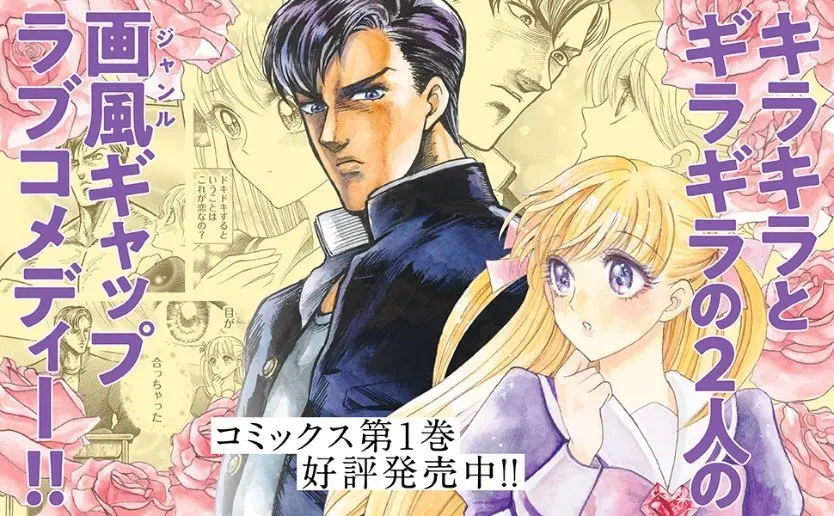 【Kirakira to Giragira】The Forbidden Fusion of Shoujo Manga and Delinquent Manga!?2024-05-06 Hana
-
 【Futsutsuka na Akujo dewa Gozaimasu ga】 The World Changes Due to the Body Swap!? The Court Drama of Two Beautiful Women is Fascinating! Futsutsuka na Akujo dewa Gozaimasu ga - Suuguu Chouso Torikae Den!2024-07-12 Hana
-
 Hot Picks Alert: Must-Read Manga Releases This Week! [7/1 (Mon) – 7/7 (Sun)]2024-07-04 Hana
-
 Hot Picks Alert: Must-Read Manga Releases This Week! [4/1 (Mon) – 4/8 (Sun)]2024-04-02 Hana