
[Affection level at absolute max!!] The affection level of the classmate he could visually check was...... surprisingly, so muddy and dark that the gauge is melting!? Can he handle this overly heavy love! Marika-chan no Koukando wa Bukkowareteiru!
[Affection level at absolute max!!] The affection level of the classmate he could visually check was...... surprisingly, so muddy and dark that the gauge is melting!? Can he handle this overly heavy love! Marika-chan no Koukando wa Bukkowareteiru!
2026-06-24
[Affection level at absolute max!!] The affection level of the classmate he could visually check was...... surprisingly, so muddy and dark that the gauge is melting!? Can he handle this overly heavy love! Marika-chan no Koukando wa Bukkowareteiru!

“Marika-chan no Koukando wa Bukkowareteiru” is a work that takes a desire everyone has imagined at least once as the starting point of its story—that if you could see another person's affection level like in a romance game, love would surely be much easier. The protagonist, Kitami Kanata, is a male high school student who lacks self-confidence and is treated as an inconspicuous existence by those around him. He has a childhood friend, Chitose Marika, whom he has had feelings for since they were young, but thinking that he is no match for the popular girl, he could not muster the courage to confess. When Kanata wishes upon a shooting star that he wants to be able to understand other people's feelings, he gains a mysterious ability to see girls' affection meters. However, what that ability brought was not a shortcut to fulfillment in love, but rather the entrance to a labyrinth of love.

The very first thing Kanata checked was, of course, the affection level of Marika, the object of his unrequited love. However, what was reflected in his eyes was not a normal numerical value, but an abnormal meter that swung completely into the negative direction and looked as if it had melted into a muddy mess. While looking at this alone makes the situation seem like nothing but being hated, Marika treats him kindly just as she always has. Rather, the gap between her acting close to him as a childhood friend and the abnormal meter display is too huge, leaving Kanata at a loss as to what he should believe. The interest of this work lies precisely here. In a normal romantic comedy, the ability to see affection levels would be a walkthrough tool, but in this work, only the feelings of the person he wants to know about most are shrouded in mystery. Readers are also drawn into the question of “What on earth is Marika thinking?” from the same perspective as the protagonist.
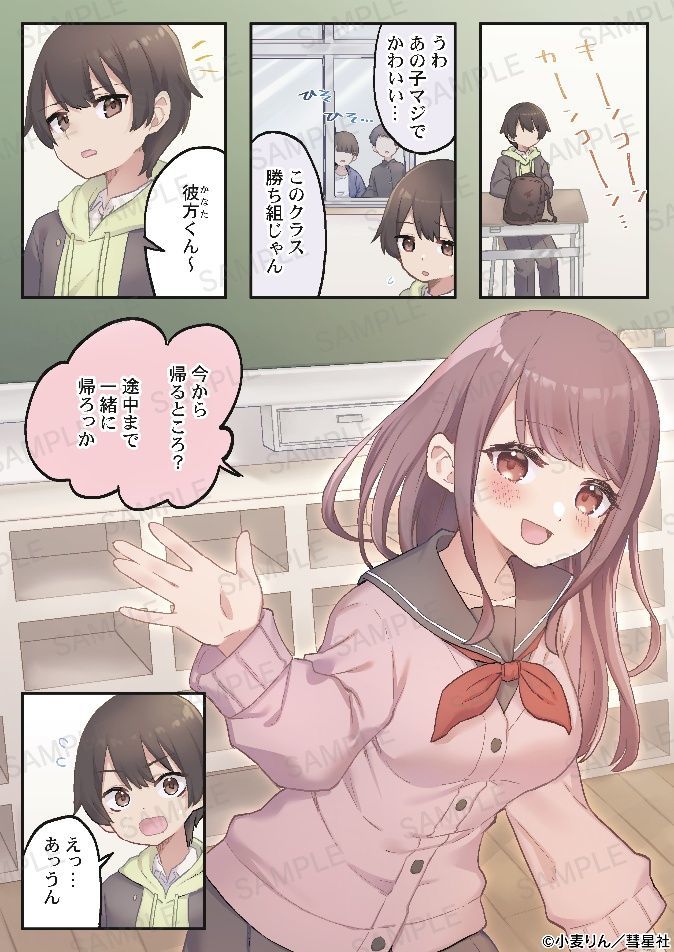
Unique girls other than Marika also appear in this work. And through the ability Kanata gained, the unexpected emotions and hidden true feelings they harbor are revealed little by little. The development where you find out that different emotions exist behind what seems to be trivial conversations and casual attitudes on the surface is highly interesting, making you feel the complexity of human relations. Looking only at the title and setting, it seems like a comical work, but it does not stop at being a mere school romantic comedy and also possesses a mystery-like interest that depicts the front and back of the human heart. The structure that breaks down the illusion that “love becomes easy if you understand the other person's feelings” from the opposite direction instead is truly ingenious.

Kitami Kanata is by no means a protagonist with special talents. Rather, he is a life-sized high school student who lacks self-confidence, is passive about romance, and could be found anywhere. That is precisely why it is easy to sympathize with the conflicts and anxieties he experiences, allowing readers to naturally invest their emotions. Even after gaining the unthinkable ability to see affection levels, the fact that problems are not resolved by that alone is also an interesting point. It depicts the reality that even if you can know feelings through numbers and meters, the human heart is not such a simple thing, and there is a charm that makes you want to cheer for Kanata as he moves forward little by little despite being bewildered. The phrase “a heart-full and hard-core romantic comedy” found in the work's introduction is by no means an exaggeration. While you are healed by interactions with the cute heroines, the disturbing truth indicated by the affection meter and the existence of emotions not shown to others give a unique tension to the story. While enjoying a bittersweet youth romantic comedy, there is always an anticipation that an unexpected truth or shocking emotion might pop out on the next page. That exquisite balance can be called the greatest charm of this work.
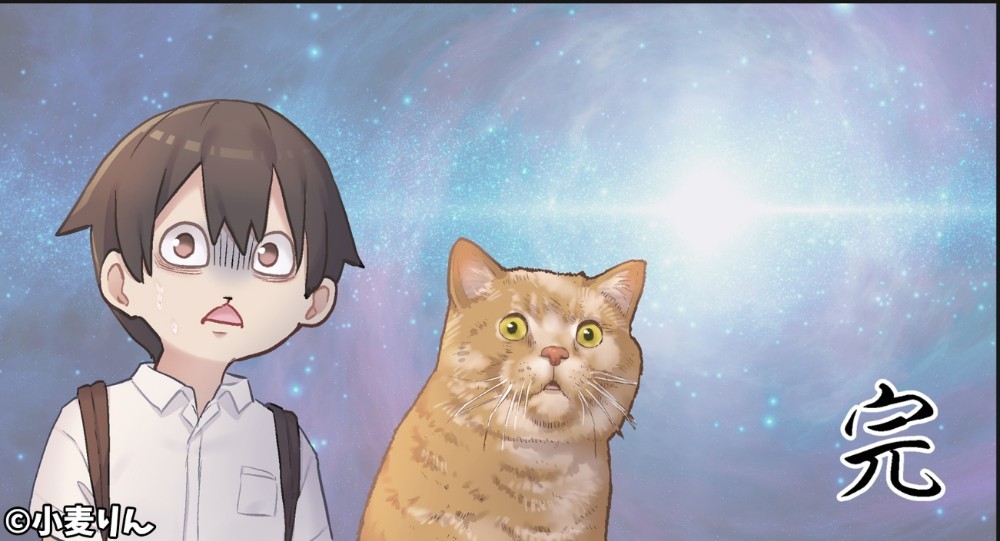
What left the strongest impression on me after reading “Marika-chan no Koukando wa Bukkowareteiru” was the point that the “ability to see the other person's feelings” is by no means all-powerful. Rather, the ironic development where questions increase precisely because feelings can be seen, making it harder to understand the other person than when they cannot be seen, is extremely interesting. In particular, Marika's broken affection meter has a powerful impact, and curious about her true feelings, you cannot stop turning the pages. It is a work that can be recommended not only to people who want to enjoy a romantic comedy with cute heroines but also to those who like unpredictable romance mysteries and psychological descriptions. At first glance, it is an orthodox school romantic comedy, but unexpected secrets and mysteries are hidden inside it, and it is full of charm that makes you more and more curious about the continuation the more you read.
 Marika-chan no Koukando wa Bukkowareteiru
▸
Popular Articles
-
 [Summer 2026 Anime] A Sage Reincarnated from Despair Rewrites the World's Common Sense. An Out-of-Spec Academy Fantasy Begins! Rakudai Kenja no Gakuin Musou: Nidome no Tensei, S-Rank Cheat Majutsushi Boukenroku!2026-09-30 Hana
-
 【Kirakira to Giragira】The Forbidden Fusion of Shoujo Manga and Delinquent Manga!?2024-05-06 Hana
-
 Hot Picks Alert: Must-Read Manga Releases This Week! [7/1 (Mon) – 7/7 (Sun)]2024-07-04 Hana
-
 【Futsutsuka na Akujo dewa Gozaimasu ga】 The World Changes Due to the Body Swap!? The Court Drama of Two Beautiful Women is Fascinating! Futsutsuka na Akujo dewa Gozaimasu ga - Suuguu Chouso Torikae Den!2024-07-12 Hana
-
 [Former Hero x Former Demon King] Enemies in their past lives!? Meeting again—is it fate, or is it destiny...!? A modern reincarnation romantic comedy about a former Hero ╳ former Demon King! Hanaori-san wa Tensei shitemo Kenka ga Shitai!2026-09-14 Hana
-
 【Kikazaru Hina wa mada Koi wo Shiranai】: A Youthful BL Tale of Romance and Growth, Centered around an Introverted Cross-dressing Cosplayer2023-06-18 Hana